 RefBoard
FLUX 3 Image Klein, tested: settings that work and how it beats FLUX.2 Klein 9B
FLUX 3's first open model, run through five hard prompts against FLUX.2 [klein] 9B on RunningHub: ComfyUI setup, steps, int8 vs bf16, Base vs distilled, and the real cost per picture.
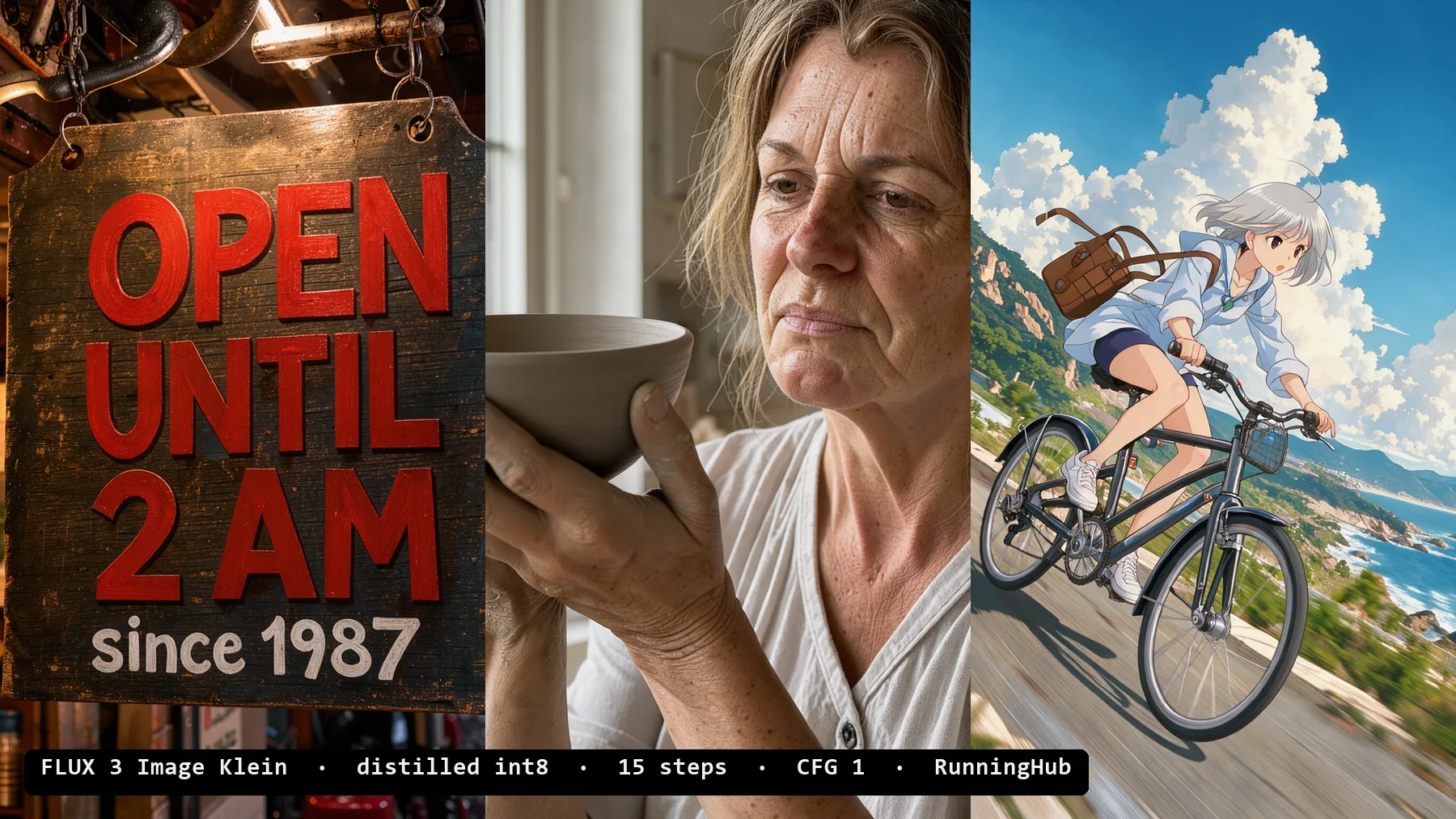
FLUX 3 Image Klein came out on October 15: Black Forest Labs' first open-weights model of the FLUX 3 family, 5.6 billion parameters, and a ComfyUI node set merged into core the same day. Three days later RunningHub already had it, so I ran it through the same five prompts as FLUX.2 [klein] 9B, the model it is meant to replace.
This is what I found, with every picture shown and every setting listed. No cherry-picking: each comparison is one render per model.
What FLUX 3 Image Klein is
| Released | October 15, 2026 |
| Size | 5.6B parameters (FLUX.2 [klein] 9B is 9B) |
| Text encoder | Qwen3-VL-4B-Instruct |
| VAE | the FLUX.2 VAE (flux2-vae.safetensors, 0.3 GB) |
| Variants | Klein (step-distilled, for generating) and Klein Base (undistilled, for LoRA training) |
| Files | bf16 11.1 GB, int8 (ConvRot) 5.8 GB, NVFP4 5.3 GB (NVFP4 needs an RTX 50-series card) |
| Licence | FLUX Kommunity License v1.0 for the model; Apache-2.0 for the text encoder |
| Extras | up to 10 reference images, up to 4K output, layout boxes, an optional Qwen3.5-9B prompt upsampler |
Black Forest Labs says the int8 file runs on 8 GB cards like the RTX 3070, and that the model scores 91 Elo above FLUX.2 [klein] 9B in text-to-image. That second number is theirs, not mine: the comparison below is my own.
Setup in ComfyUI
You need a ComfyUI build from October 15 or later (support landed in PR #17064, after the last release tag, so update to the latest version). Then:
| File | Folder |
|---|---|
flux3-image-klein-int8-convrot.safetensors |
models/diffusion_models |
qwen3vl_4b_int8_convrot.safetensors |
models/text_encoders |
flux2-vae.safetensors |
models/vae |
All three are in Black Forest Labs' flux-3-image-klein-comfy repository on Hugging Face. It is gated: accept the terms on the page first.
The graph is short, and two details matter:
- Load CLIP type:
flux3. Notflux2, notqwen_image: the official templates useflux3, and so did every test here. - Empty latent:
EmptyFlux2LatentImage, the same latent node as FLUX.2.
| Setting | Distilled (Klein) | Base |
|---|---|---|
| Steps | 15 (BFL's chart says 16) | 50 |
| CFG | 1.0 | 3.5 |
| Sampler / scheduler | er_sde / simple | er_sde / simple |
The official templates are in ComfyUI under Workflow → Browse Templates: "FLUX 3 Image Klein Distilled Text to Image" and three siblings (base, and image edit for both). Or take the exact graph I ran:
The official templates switch on the prompt upsampler (a separate 9B model that rewrites your prompt). Black Forest Labs' page even says not to use the model without it. Every picture in this article was made without the upsampler, from the prompts exactly as written, so you can judge the base model. The results below suggest it holds up fine without it.
How I tested
- Where: RunningHub, Standard tier (24 GB). Everything here is reproducible there without a local GPU.
- Models: FLUX 3 Image Klein distilled int8 (15 steps, CFG 1) against FLUX.2 [klein] 9B fp8 with its own official settings (4 steps, CFG 1, euler, Flux2Scheduler).
- Size: 1024 x 1024.
- Prompts: five, each aimed at one weakness: lettering, hands and skin, anime motion, exact counts and positions, and small printed text.
- Seeds: RunningHub replaces the seed on every run, so the two models never shared a seed. That is why compositions differ; judge each picture on whether it did what the prompt asked.
1. Lettering on a sign
A hand-painted wooden sign hanging outside a small ramen shop at night in the rain. The sign reads "OPEN UNTIL 2 AM" in bold red letters, and below it in smaller white letters "since 1987". Warm light from the doorway, wet street reflections.
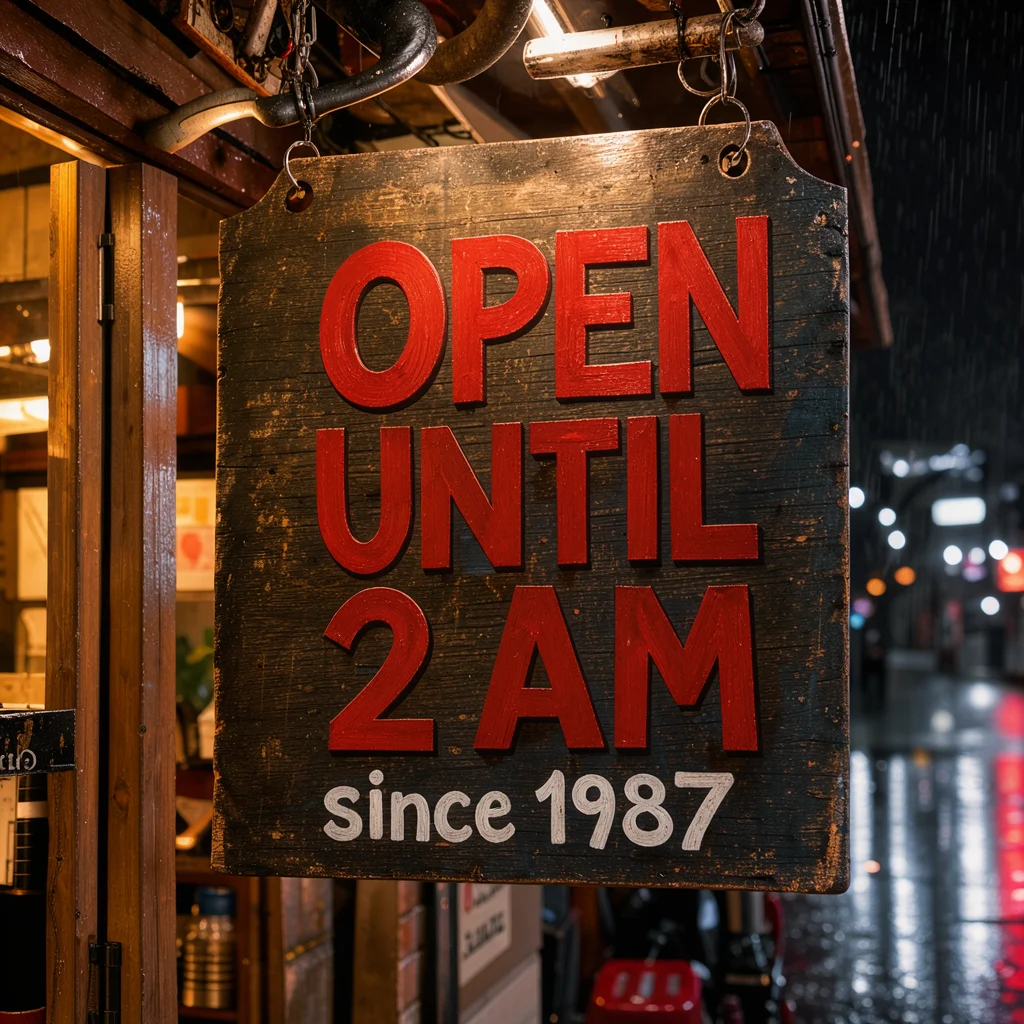
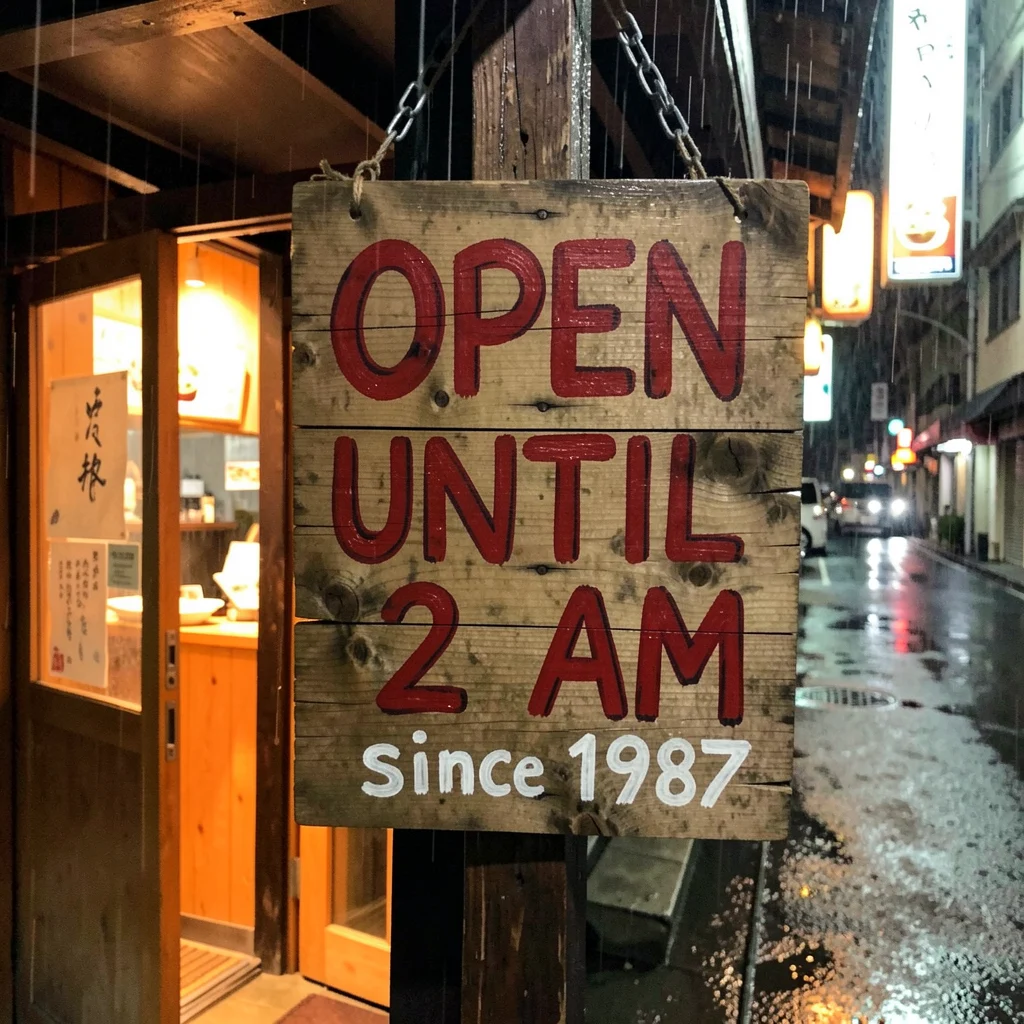
Left: FLUX 3 Image Klein. Right: FLUX.2 [klein] 9B.
Both got every letter right, both lines included. FLUX 3 painted thicker, cleaner strokes that look hand-lettered; FLUX.2 made a paler, weathered board with a busier street behind it. For lettering, call it a draw: the older model was already good at this.
2. Hands, skin and a held object
Close-up portrait of a 40-year-old woman potter in her studio, holding a freshly thrown clay bowl up to the window light with both hands. Clay on her fingers and forearms, freckles, visible skin texture, flyaway hair, soft overcast daylight, shot on 85mm.
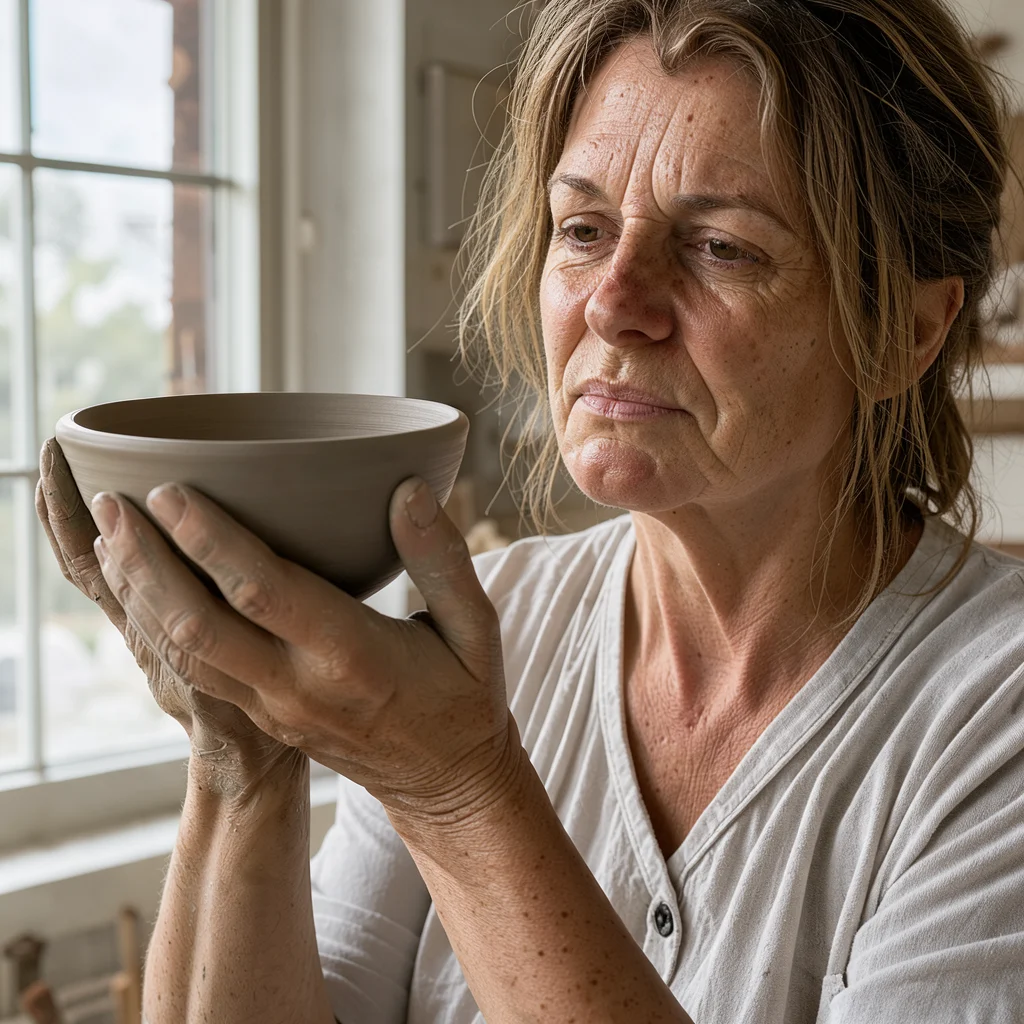
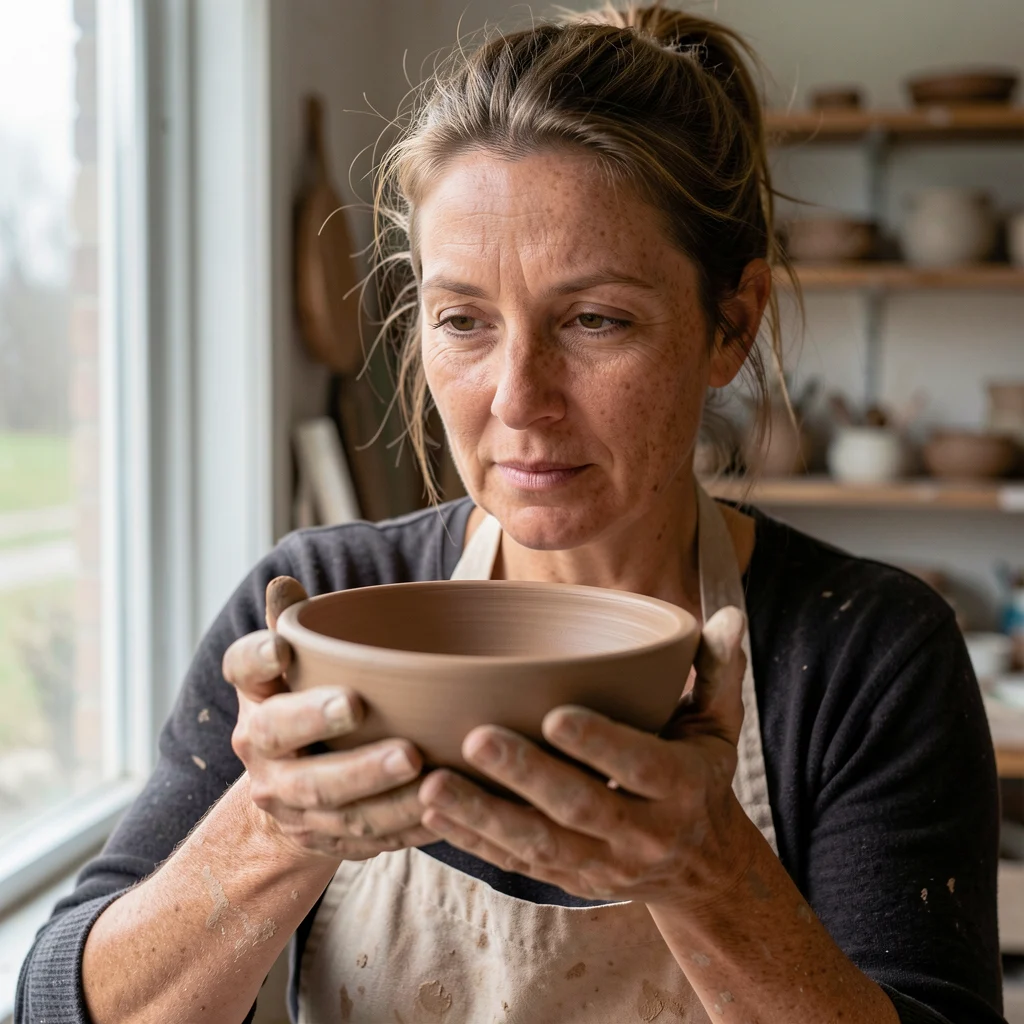
Left: FLUX 3 Image Klein. Right: FLUX.2 [klein] 9B.
Both sets of hands have five fingers, grip the bowl believably, and carry clay in the creases. FLUX 3 went further on the face: pores, freckles and wrinkles read as real skin at full size. FLUX.2 added an apron and shelves of pots, which tells the "potter" story better, but its skin is smoother. Slight edge to FLUX 3 for skin, to FLUX.2 for storytelling.
3. Anime with motion
Anime illustration with cel shading: a young woman with short silver hair rides a bicycle down a steep coastal hill in summer, her messenger bag flying behind her, tall cumulus clouds, the sea on the right side, a strong sense of speed.
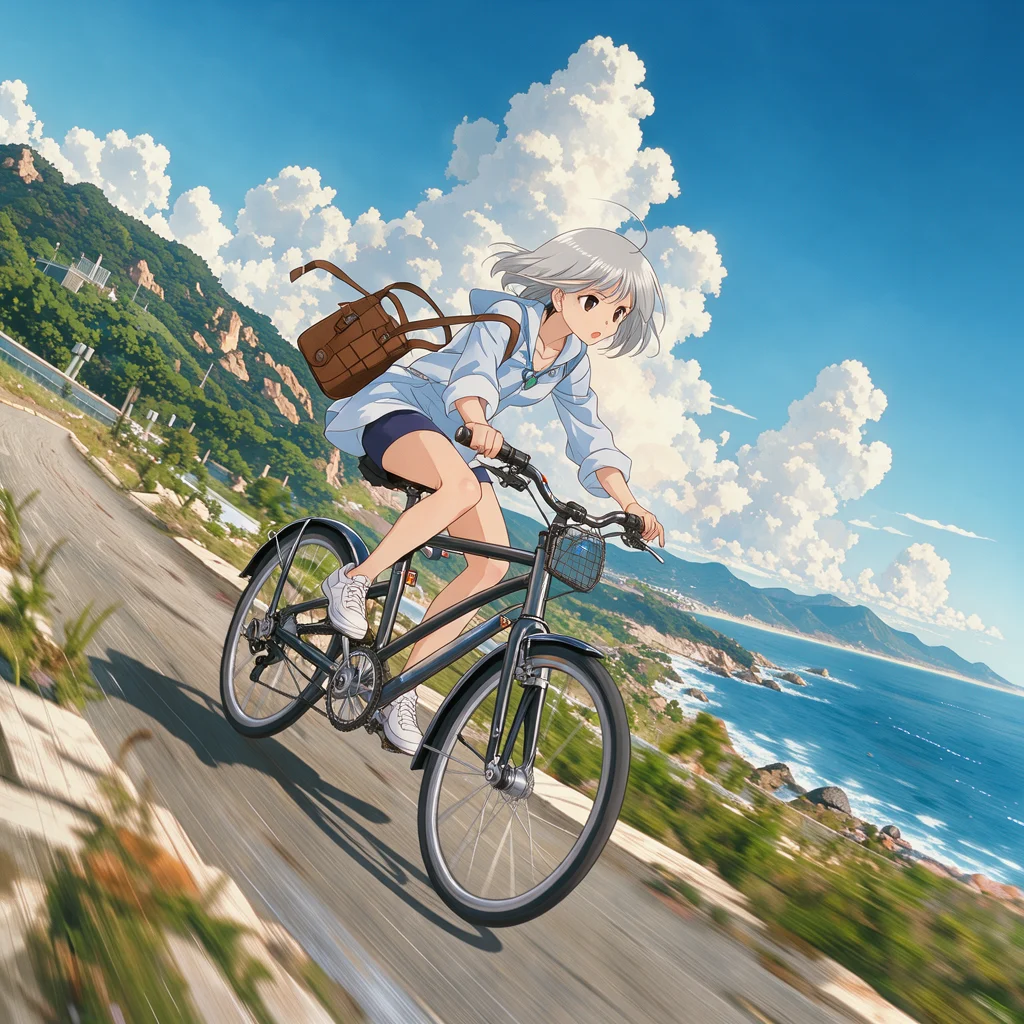
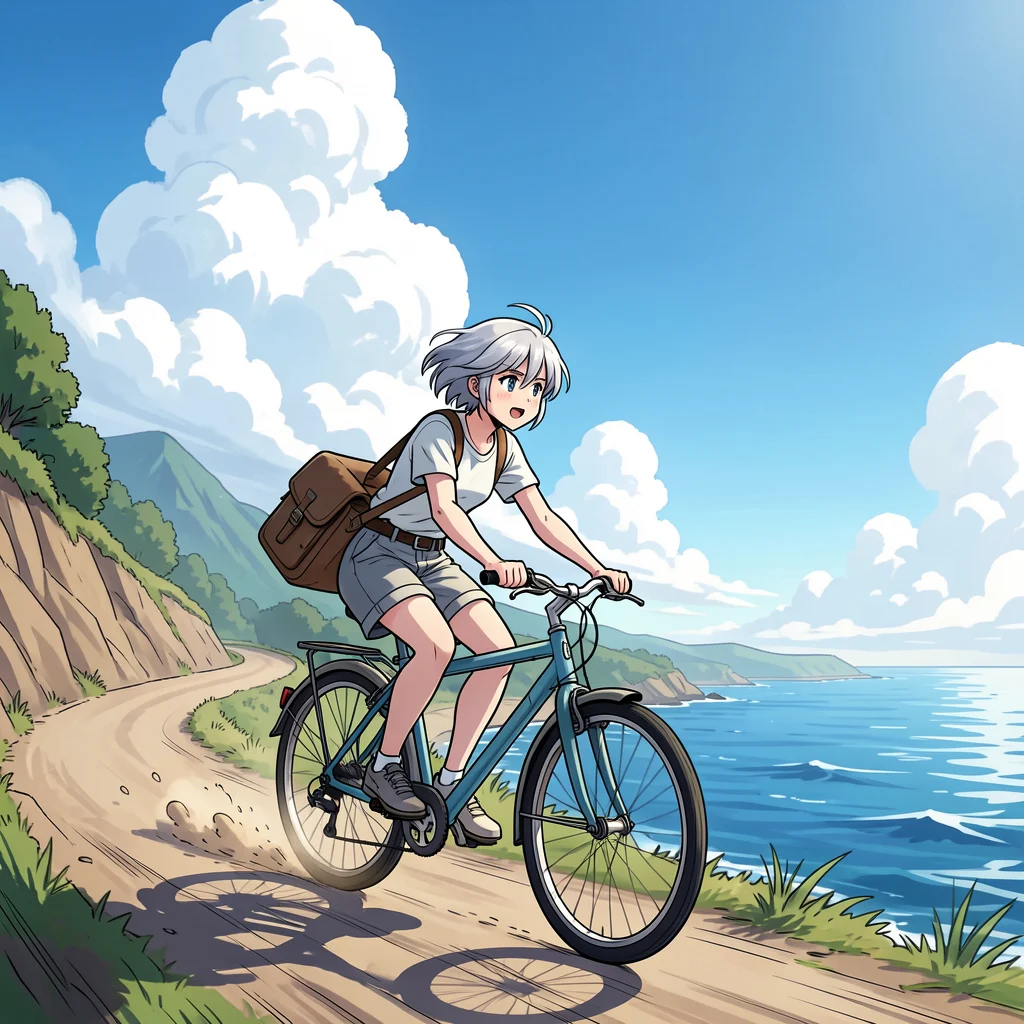
Left: FLUX 3 Image Klein. Right: FLUX.2 [klein] 9B.
This is the clearest difference. FLUX 3 tilted the camera, blurred the road and threw the bag out behind her: it actually drew "a strong sense of speed". FLUX.2 drew a clean, calm picture of someone riding a bike, with the bag at her hip. Both kept cel shading and put the sea on the right. FLUX 3 wins on following the mood of the prompt.
4. Exact counts and positions
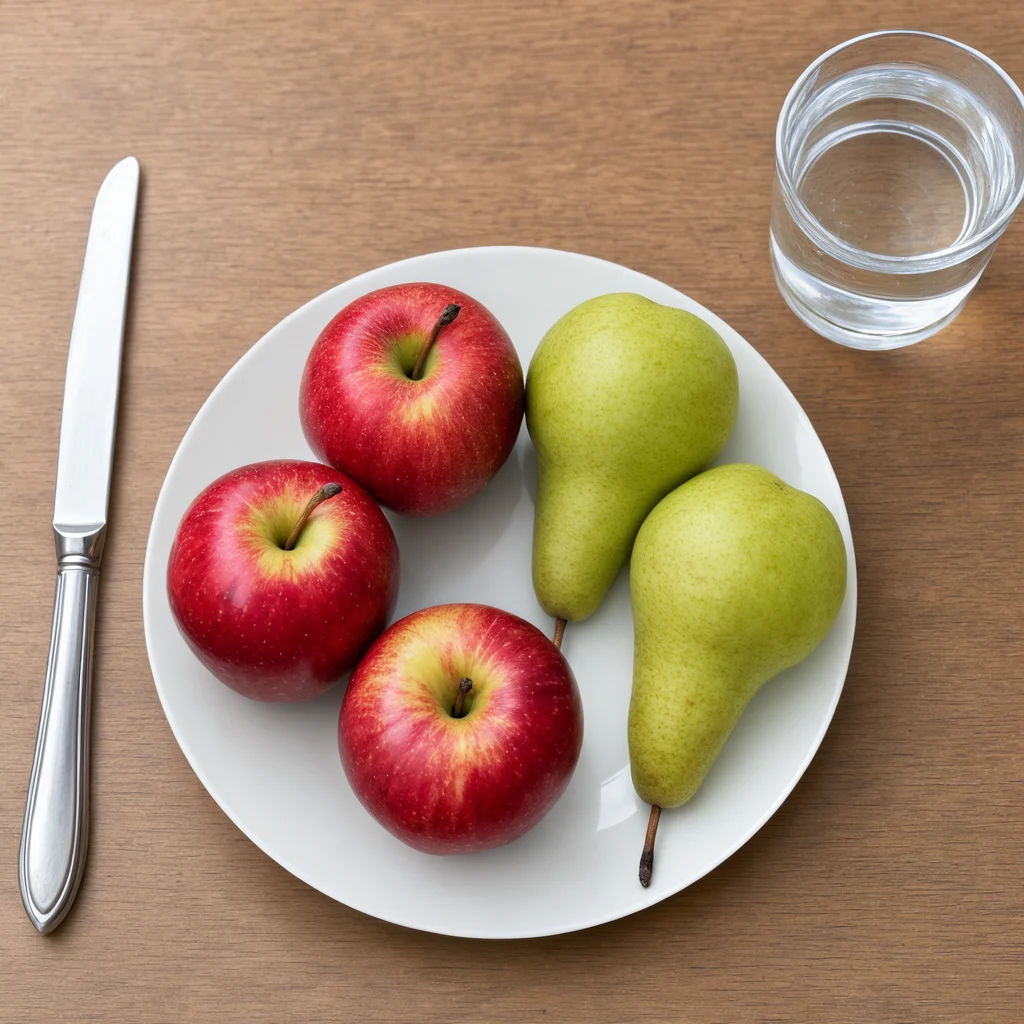
Top-down photo of a white plate on a wooden table: exactly three red apples on the left half of the plate and two green pears on the right half. A silver knife lies to the left of the plate and a glass of water stands to the right of it.
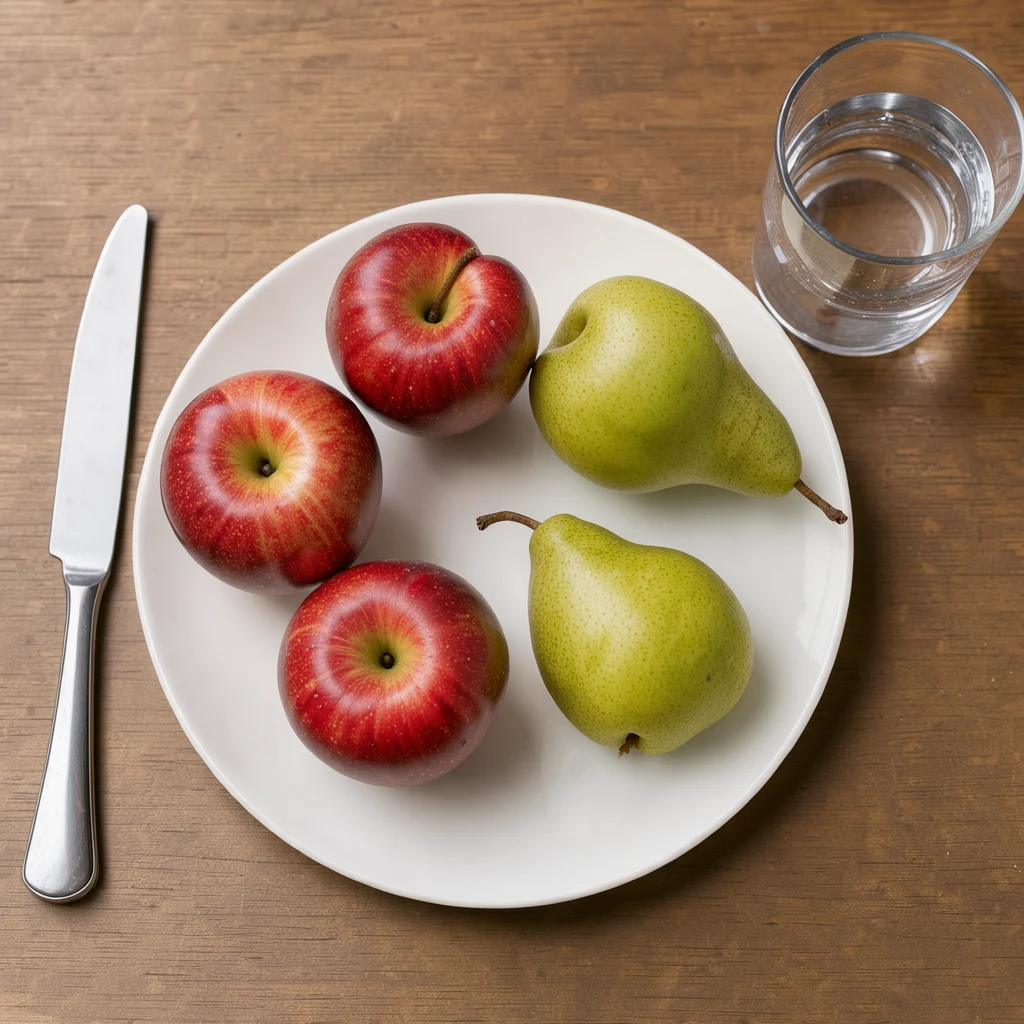
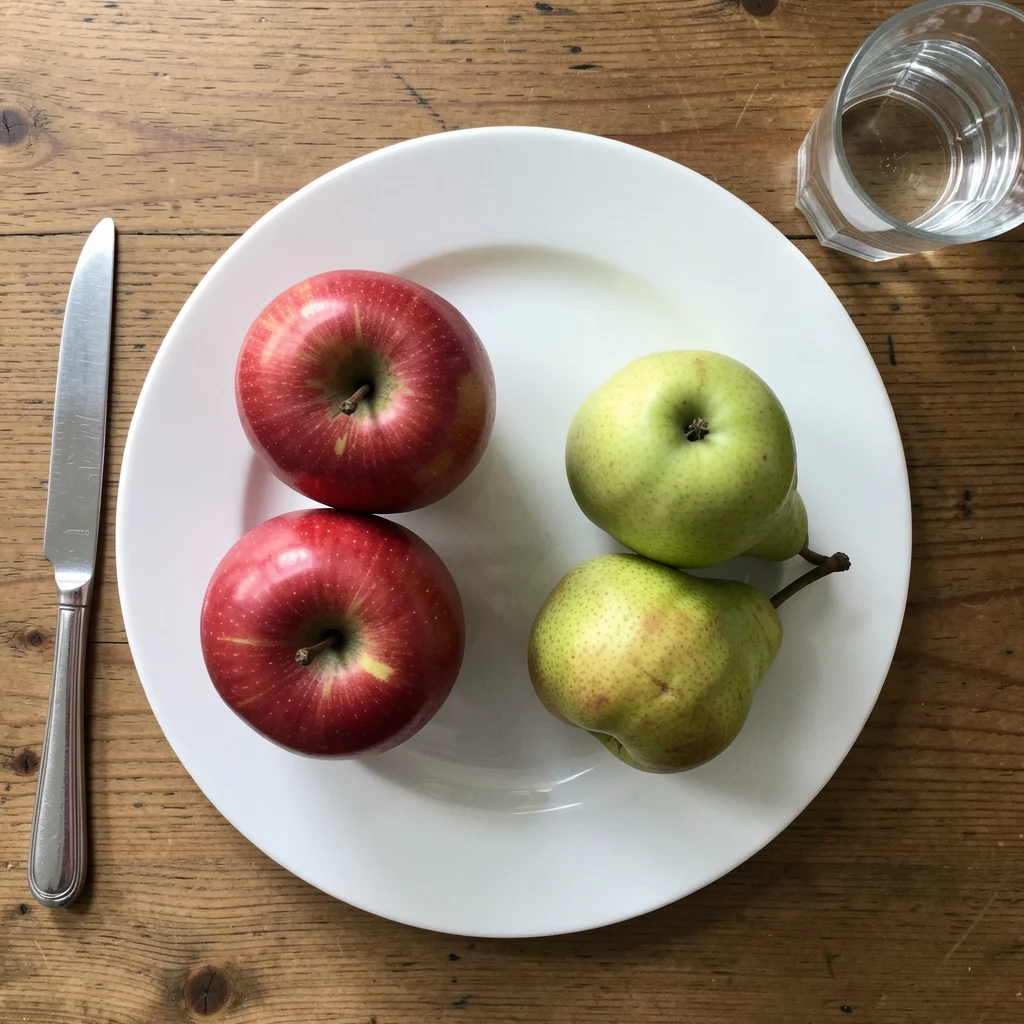
Left: FLUX 3 Image Klein. Right: FLUX.2 [klein] 9B.
FLUX 3: three red apples on the left, two pears on the right, knife left, glass right. Everything as asked. FLUX.2: two apples and two green fruits (one closer to an apple than a pear), knife and glass in place. This is the kind of prompt where the newer text encoder shows. FLUX 3 wins.
5. Small printed text on a product
Studio product shot of one white sneaker floating above a shallow puddle, a crisp reflection in the water, soft blue gradient background. The word "REFBOARD" is printed in small black capital letters on the heel.
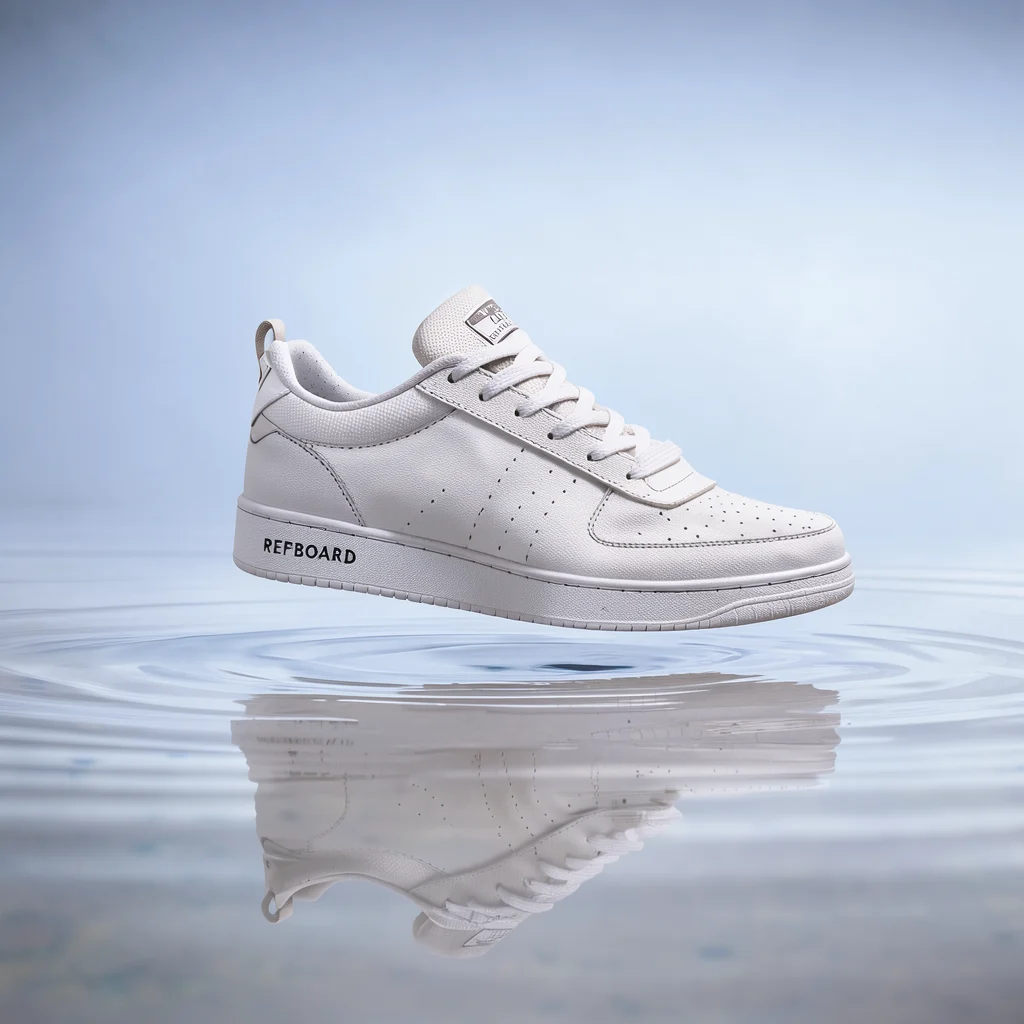
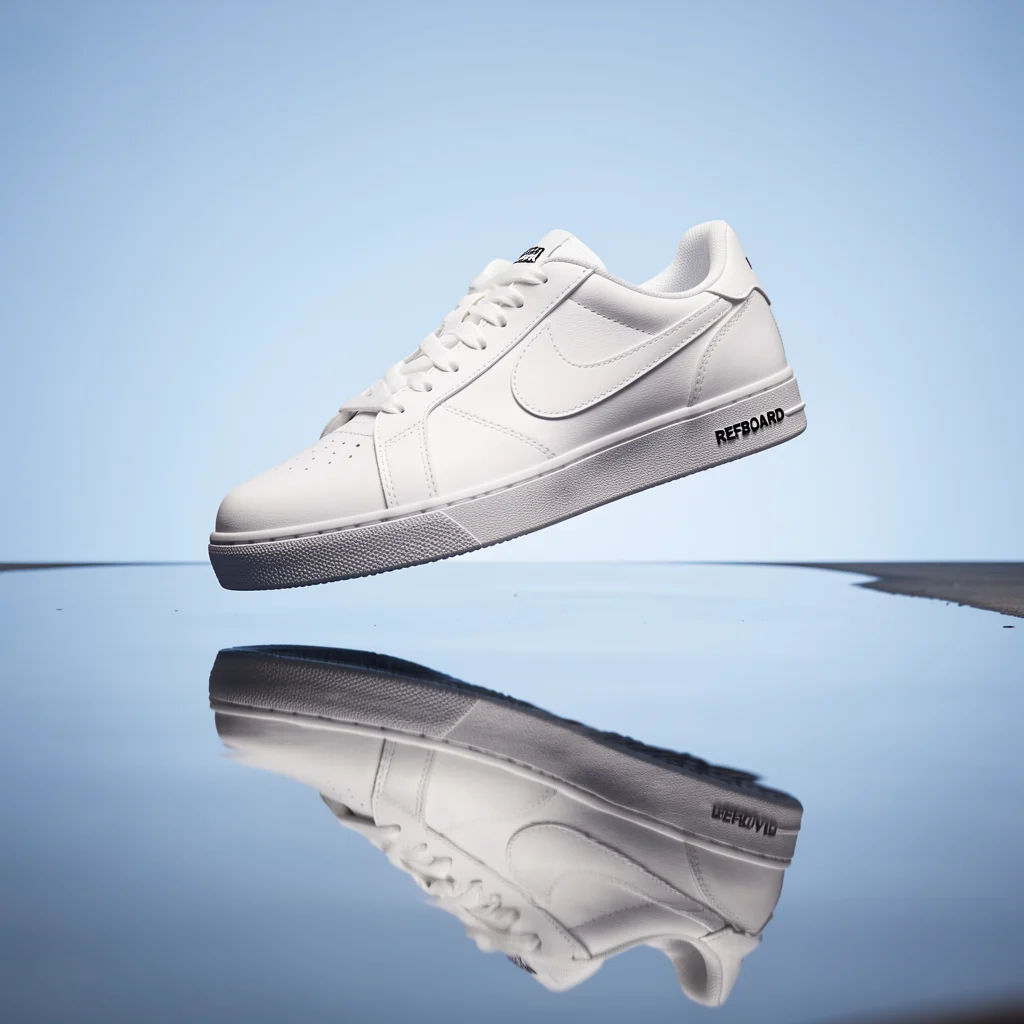
Left: FLUX 3 Image Klein. Right: FLUX.2 [klein] 9B.
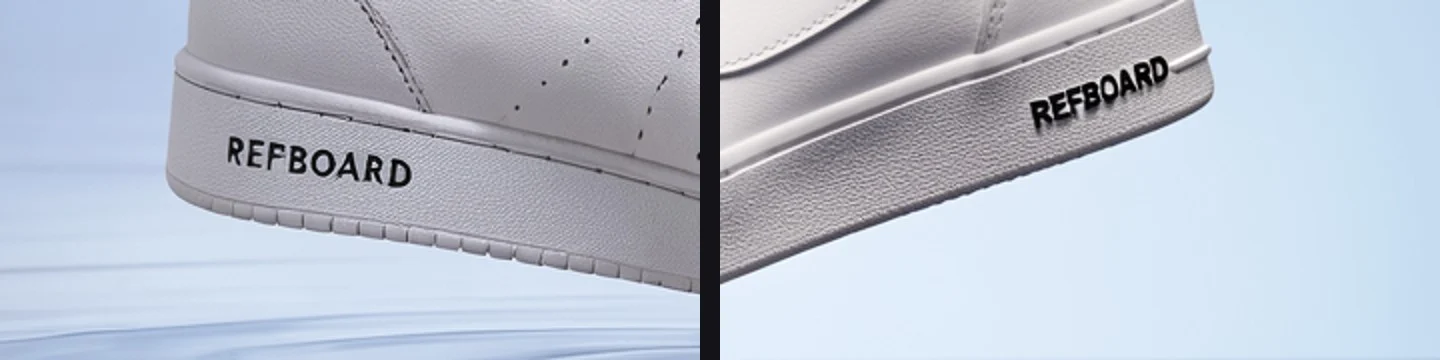
The heel at full resolution. Both spelled REFBOARD correctly: FLUX 3 printed it flat, FLUX.2 embossed it.
Both nailed small text that older models usually mangle. FLUX 3 made a softer studio shot with ripples in the water; FLUX.2 a sharper one with a mirror-clean reflection. A draw.
Score
| Test | FLUX 3 Image Klein | FLUX.2 [klein] 9B |
|---|---|---|
| Lettering | correct | correct |
| Hands and skin | correct, more skin detail | correct, smoother skin |
| Anime motion | followed "sense of speed" | calm, missed the mood |
| Counts and positions | all correct | one apple short |
| Small product text | correct | correct |
FLUX 3 never did worse, did better on the two hardest prompts, and is 38% smaller. If you run FLUX.2 [klein] 9B today, this is a straight upgrade.
How many steps?
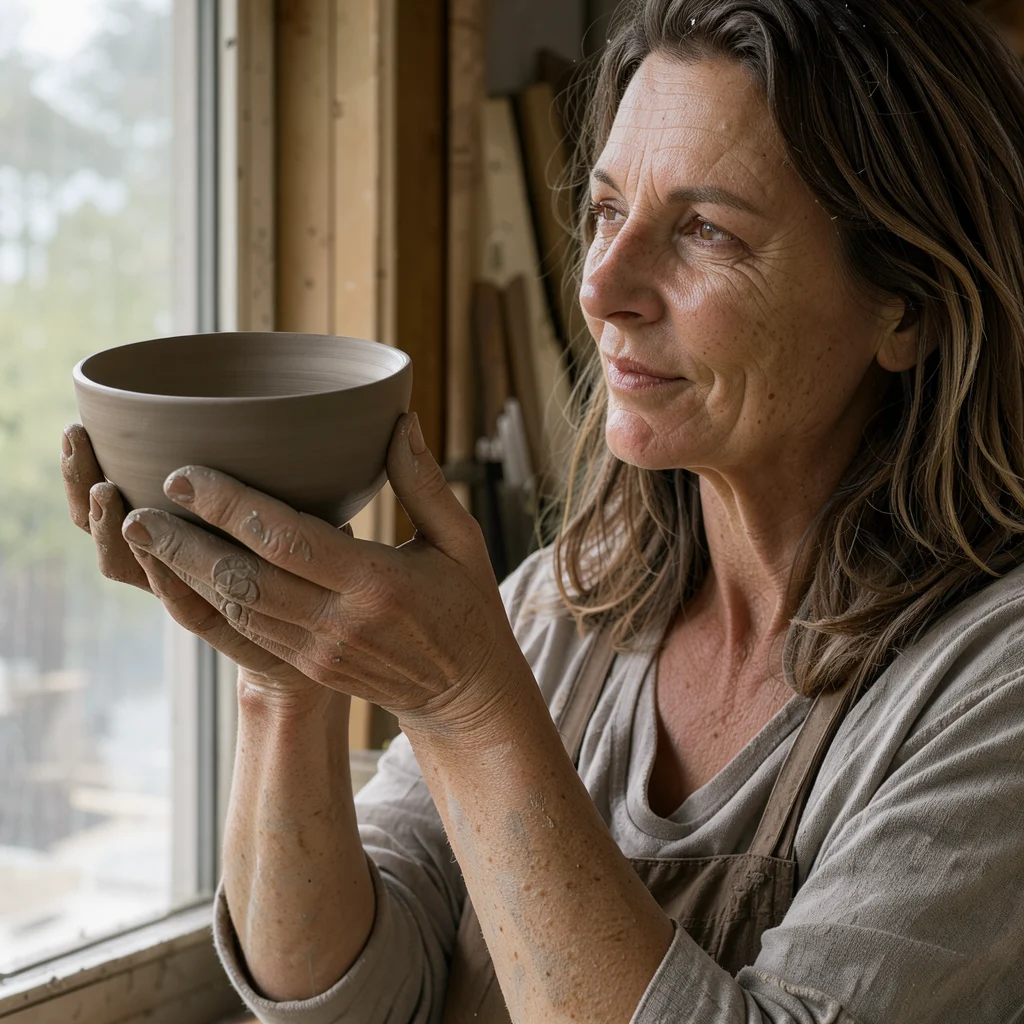
Same prompt as test 2 (the potter), distilled int8:
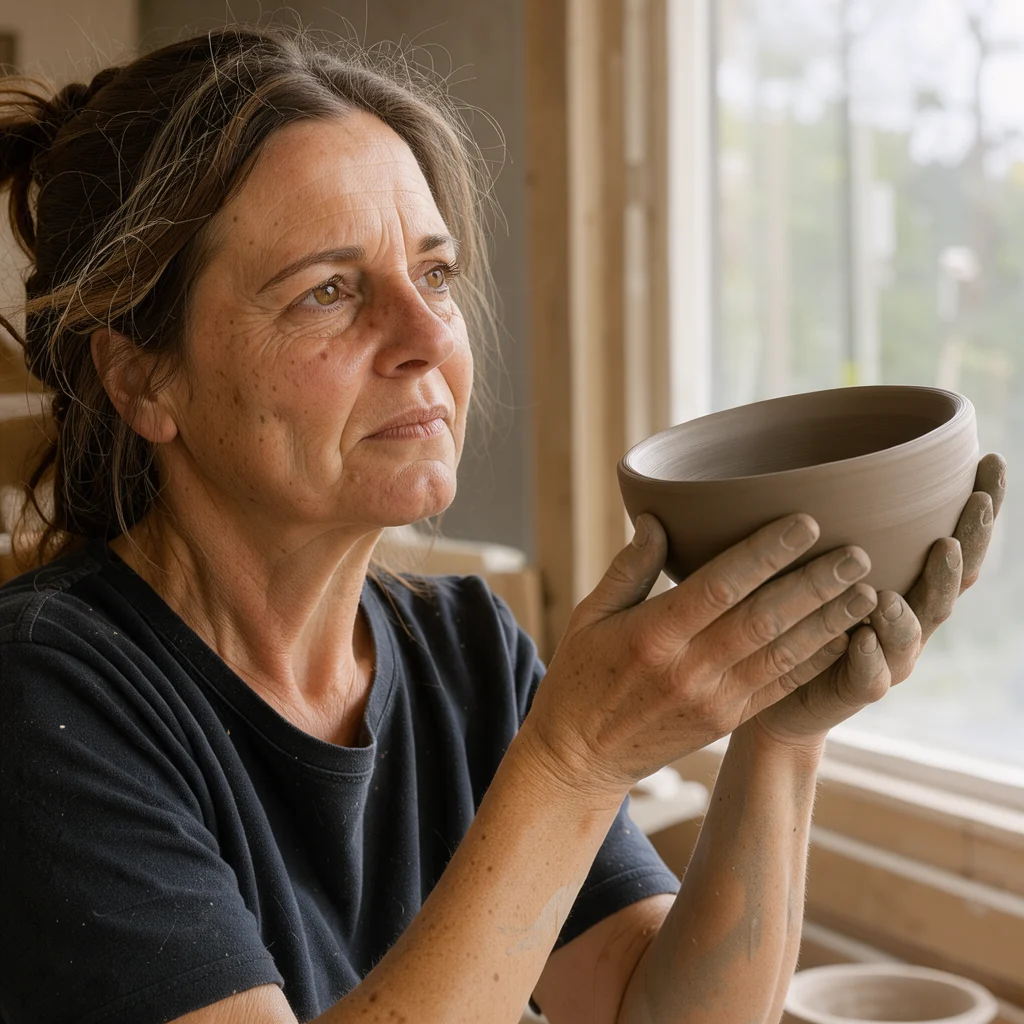
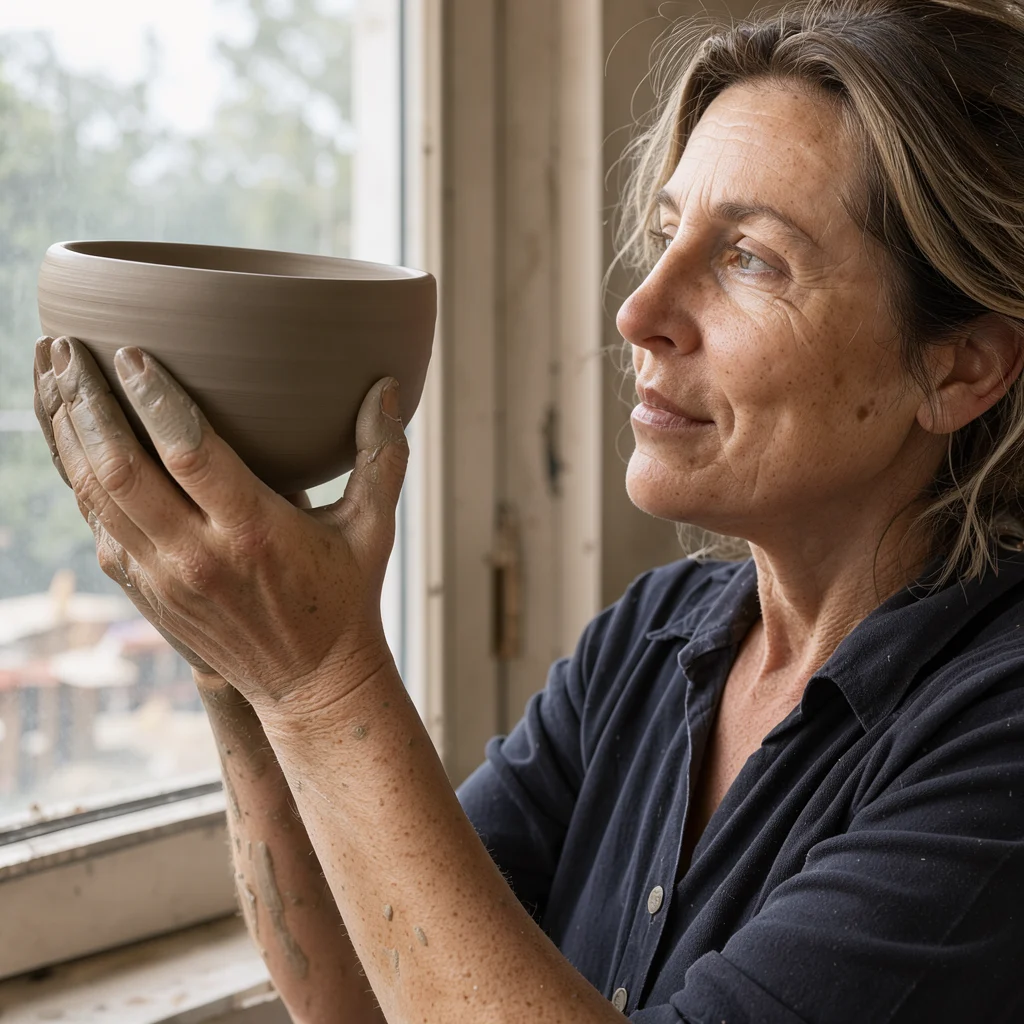
8 steps, 15 steps, 24 steps. Different seeds, as explained above.
- 8 steps is already usable: correct hands, believable light, slightly smoother skin.
- 15 steps adds the fine skin texture. This is the official setting and the one to use.
- 24 steps gave nothing I could see over 15. Save the time.
int8 or bf16?
Left: int8 (5.8 GB). Right: bf16 (11.1 GB).
I could not find a quality difference at 1 megapixel. Use int8: half the download, half the memory, and per Black Forest Labs it fits 8 GB cards.
Do you need the Base model?
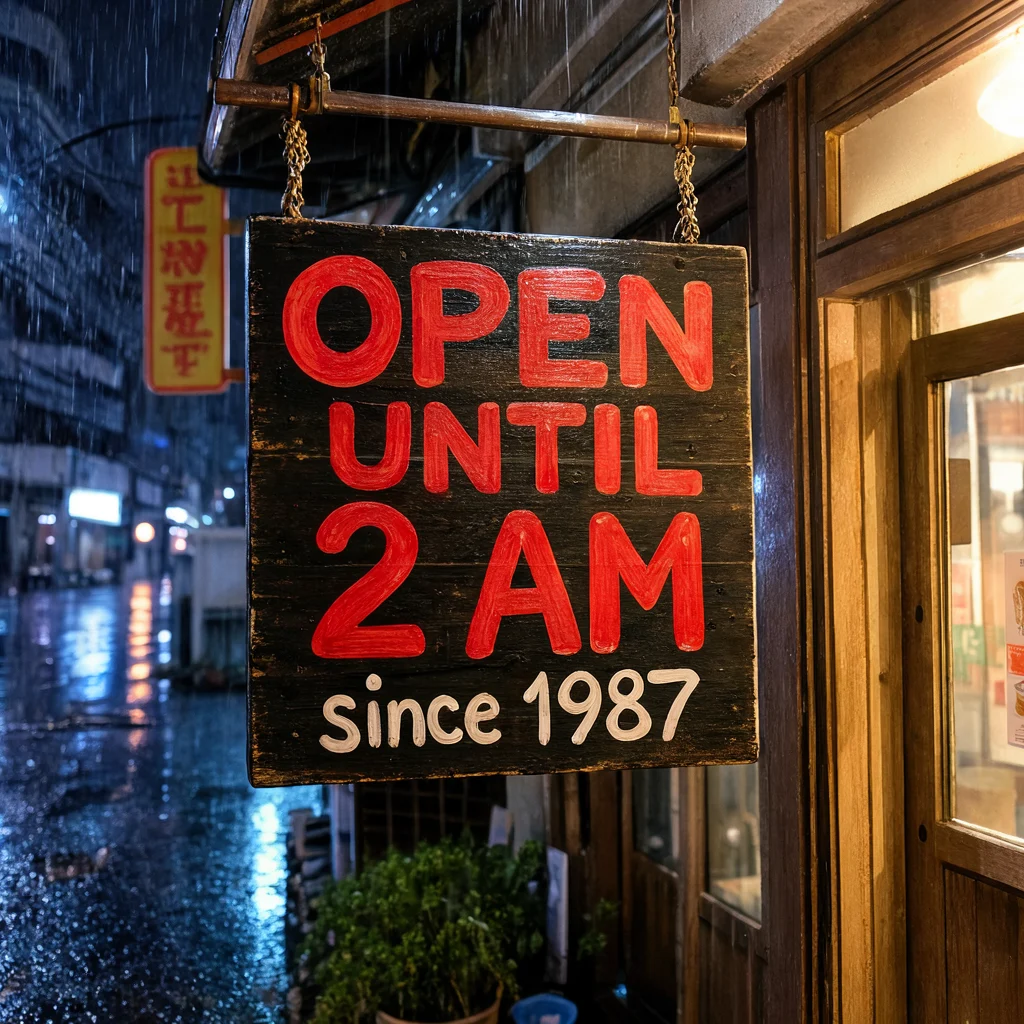
Left: distilled, 15 steps, CFG 1. Right: Base, 50 steps, CFG 3.5.
Base got the sign and the fruit count right too, but it takes more than three times the steps and was not visibly better at plain generation. It exists for training LoRAs. For making pictures, use the distilled model.
What it cost on RunningHub
| Task (Standard tier, includes loading the model) | Pictures | Coins | GPU seconds |
|---|---|---|---|
| FLUX 3 Klein distilled, first test | 1 | 6 | 29 |
| FLUX 3 Klein distilled, test set | 8 | 19 | 91 |
| FLUX.2 [klein] 9B, test set | 5 | 12 | 58 |
| FLUX 3 Klein Base (50 steps) | 3 | 14 | 70 |
Batched, FLUX 3 Klein came to about 2.4 coins and 11 GPU seconds per 1024 x 1024 picture, model loading included. That is cheap for a model of this quality. Black Forest Labs quotes about 4 seconds on an RTX 5090 and under 9 seconds on an RTX 4070 with the int8 file; I have not measured local speed yet.
What I have not tested yet
- The prompt upsampler, and whether it actually improves these five prompts.
- Image editing and multiple reference images.
- Layout boxes (the new
Flux3LayoutPromptnode). - 2K and 4K output.
Those are next. If you have tried any of them, leave your settings and results in the comments.
Sources: Black Forest Labs release notes and Hugging Face model card, ComfyUI's official workflow templates, ComfyUI Wiki for the ComfyUI merge. Everything else is my own testing on October 18, 2026.
Comments
Loading…